« September 2007 | Main | November 2007 »

October 30, 2007

Imaging the Medical Humanities: On Aesthethics & Disability

Laura Ferguson, an artist working in New York City, has put together a phenomenal blog post at the Literature, Arts & Medicine Blog.  I'd like to use it to frame this installment in the Imaging the Medical Humanities series.  She writes,

Can a deformed body be beautiful? Yes, through an artist’s eyes – and I believe art can help medicine to broaden its vision, and embrace a new aesthetic of the body.

I’m an artist and for the past twenty years I’ve been using my own body, inside and out, as the subject of my work. My anatomy is an unusual one because of scoliosis, a curvature of the spine, and I found intriguing visual possibilities in the image of a body that was beautiful yet flawed. My drawings are quite intimate and personal, and at the same time strongly based on science, on an understanding of anatomy and physiology, and specifically on medical images of my own skeleton that were made for this purpose.

She notes that while many doctors have commented on the beauty of her portraits and the insight it provides, "almost all the orthopedists who tell me they love my work also try to convince me I should have more surgery – whether or not I’ve asked them for medical advice. Ultimately, it seems they can’t help but see an unusual anatomy as a problem to be fixed."

This is a key problem with the medical model of disability, that it sees difference as abnormal, as something that requires fixing.  This has a number of deleterious effects, not least of which is that it attaches notions of deviance to difference.  Many disabled persons internalize this construction; as I have noted before, I can only begin to imagine the suffering of a person who " has constantly been told that they are, in essence, less than what they should be, that they are less than whole, somehow incomplete, inferior to others who do not have the impairment(s) at issue." 

The construction of disabled identity as a lack, as dysfunction, has also had grave social consequences.  Because disabled persons' bodies have traditionally been assessed in terms of this lack, this deviance, they have been ripe for exploitation in unethical human subjects research.  Goodman et al.'s notion of human subjects research being a means of rendering un-useful bodies useful to the state is relevant in explaining further how the medical model of disability has been turned to dark ends.  The extremely popular eugenics movement of the early 20th century is intimately connected to this frame, as well as being another manifestation of overt reliance on a conception of disability as deviance.

I wholeheartedly agree with Ferguson that "art is a good place to look for an alternative aesthetic," one that explores the ambiguities of bodies and the possibilities of a conception of difference without a necessary connection to deviance.  While there are many wonderful disability artists, I am continually moved by Riva Lehrer's art, such as this:

Continue reading "Imaging the Medical Humanities: On Aesthethics & Disability" »
Medical Humanities Bibliography: On Death & Dying

MH Blog Contributor Patrick S. O'Donnell has very kindly put together one of his patented, amazing bibliographies, this one on death & dying.  It is organized thematically into spiritual traditions as well as secular approaches.  Just looking at it tires me out.

You can download it here (.DOC): Download death_and_dying_bibliography.doc

Many thanks, Patrick!

October 29, 2007

On Smaller Class Size

Via Slate comes word of a new study released in the November 2007 issue of American Journal of Public Health.  The study tracked the role of class size on a number of outcomes including projected earnings, welfare payments, crime costs, quality-of-life scores, and mortality.

Remarkably, the authors found that, when targeted to low-income students, smaller class size produced savings of approximately $200,000, and a net gain of 1.7 QALYs.

Notwithstanding my dislike of QALYs, this study concludes that reducing class-size could conceivably have a greater effect on socioeconomic disparities and on mortality than most acute care interventions.  I have been beating the drum on this general point for some time now, that increasing access to acute care interventions is not an evidence-based way of improving health and ameliorating illness. 

Changing the way we conceive of the causes of health and illness is, IMO, the fundamental barrier to improving public health in the U.S.  As important as access to care is in a moral paradigm, the evidence, already robust, is mounting that public health policies geared towards the social determinants of health are far and away the most effective means of improving health.

(h/t Frank)   

October 25, 2007

International Network for Philosophy and Psychiatry: Book Links and Review

For more information on the series mentioned below published by OUP: International Perspectives in Philosophy and Psychiatry, please see this website for the International Network for Philosophy and Psychiatry:  http://www.inpponline.org/ (click on 'Publications'). There is a link there as well to the following review from Philosophy, Ethics, and Humanities in Medicine, 2007, 2:9: http://www.peh-med.com/content/2/1/9

Patrick S. O'Donnell

Conceptual Clarification: Mental Illness

Presumably one thing all of us are interested in is attaining some measure of conceptual clarity with regard to the concepts that are fundamental to the lexicon of bioethics and medical humanities. Of course Daniel does a wonderful job toward that end with his Medical Humanities Lexicon posts. Here my aim is a bit more modest as I'd simply like to note Christian Perring's helpful entry from the Stanford Encyclopedia of Philosophy on "mental illness:" http://plato.stanford.edu/entries/mental-illness/. Perring does a nice job of covering most of the fundamental questions intrinsic to the notion of mental illness and the manner in which we categorize and classify what comes under this rubric.

His bibliography is also quite good, indeed, I hope in the future to comment on a few of the titles found there. One conspicuous omission, however, is found near the end of the entry in the discussion of alcoholism. Perring rightly notes that "there has been a great deal of discussion of whether alcoholism should count as a disease, by physicians, philosophers, legal theorists and policy makers," proceeding to invoke Messrs. Watson, Mele, and Elster as exemplars of philosophical treatments that broach such subjects as "the irrationality of alcoholics, how to explain their symptomatic behavior, and to what extent they are responsible for their behavior." These are questions I've long been interested in, so I was a bit surprised to see that Perring did not mention, let alone cite, the work of one of my former teachers, Herbert Fingarette, author of a pioneering work on these issues, Heavy Drinking: The Myth of Alcoholism as a Disease (Berkeley, CA: University of California Press, 1988). I'll be discussing Fingarette's arguments in a future post, but here I just want to give credit where it's due, and Fingarette richly deserves recognition for his seminal analysis of the aforementioned topics in the study of alcoholism. (For an introduction to Fingarette's work as a philosopher, see the appreciative collection of articles in Mary I. Bockover, ed., Rules, Rituals, and Responsibility: Essays Dedicated to Herbert Fingarette [La Salle, IL: Open Court, 1991])

Lastly, I should point out that Perring's entry on mental illness was penned before the appearance of a thought-provoking (thus recommended) book on same was published, Neil Pickering's The Metaphor of Mental Illness (New York: Oxford University Press, 2006). Incidentally, this book is part of an excellent series of volumes that, again, I highly recommend: International Perspectives in Philosophy and Psychiatry published by Oxford Univerisity Press (and most if not all of which are available in paperback).

October 24, 2007

Onora O'Neill on medical consent

Here's a delightful, albeit short, interview with Onora O'Neill on the topic of medical consent: http://nigelwarburton.typepad.com/philosophy_bites/2007/10/onora-oneill-on.html

She happens to be one of my favorite contemporary philosophers. On the subject matter covered here, please see her Rethinking Informed Consent in Bioethics (Cambridge, UK: Cambridge University Press, 2007).

October 22, 2007

Medical Humanities Bookworm: On Being A Doctor 3

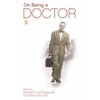
41aszj0lrl_2 Today's Medical Humanities Bookworm features On Being A Doctor 3, Christine Laine and Michael A. LaCombe, eds. (Philadelphia: American College of Physicians Press, 2007).

This book is the third volume of a series exploring the role of literature in medicine.  More specifically, all of the stories, essays, and poems contained in the book first appeared in Annals of Internal Medicine between 1999 and 2006.*

The book is thematically organized into sections "On Society and the World Around Us," "On Becoming a Doctor," "On Being a Patient," "Balancing the Personal and Professional," "Those Who Are Our Patients," "On Aging," "On Death and Dying," and "Hospitals, Health Systems, Contentions."  I particularly enjoyed the section on being a patient, as I am drawn to health care provider's illness narratives for a variety of reasons.  Literature and medicine scholars often write about the importance of the moral imagination, and what interests me about the stories told by providers who become patients is that imagination, it would seem, is superfluous.

Though there are many reasons for bringing literature into medical practice, there are both ethical and aesthetic imperatives for doing so.  From the ethical perspective, reading literature about medicine can provide important space for physicians and providers to reflect upon difficult moral issues (faced by characters), to weigh questions of character and virtue, and, in so doing, to sharpen the lived flow of experiences as a provider.  The phrase "lived flow of experiences" may seem like fluff, but it is actually a term used by some medical anthropologists intended to refer to the daily moments of a person's conscious life, as opposed to the abstractions that typically dominate academic discourse.

Physicians that read and reflect upon other physicians' experiences, as expressed through memoir, essay, short story, or poem, have the opportunity to examine the ethical stuff of daily practice.  The ethical content of the literature collated in On Being A Doctor 3 is both obvious and rich.  Ethics, as Iris Murdoch notes, is a factor in all of our lived lifes, in the moments of our practices.  It is hardly confined to the quandaries or disasters that characterize medical ethics for so many.

Thinking about ethics in the life of medical practice purely in terms of those quandaries is, I submit, a deeply impoverished way of conceiving about the ethical (medical) life.  As others have noted, reading and reflecting about literature and medicine may also enhance one's moral imagination.  This is because quality works of literature tend to require the reader's response to the particular experiences the character faces: 'What should X do? Why? What would I do?' Sharpening one's own moral imagination would seem to be a boon to clinical practice in and of itself. 

Moreover, Rita Charon has pioneered the term "narrative medicine" to refer to the ways in which reading and analyzing narratives may itself enhance therapy and practice:

Through rigorous and disciplined training in such narrative skills as close reading of literary texts and clinical texts, narrative writing about patients, and reflection on one's own clinical experiences, doctors can learn to attend accurately to what their patients tell them (in words, silences, gestures, and physical findings), can reconcile the multiple contradictory versions of any given clinical story, can interpret their own emotional responses to patients, can imagine robustly each patient's plight, can adopt the patient's or family's perspective on the events of illness and–as a result of all these–can offer singularly fitting care.

Though narrative studies are not my area of specialization within the medical humanities (my focus is on ethics and on the history of medicine), I believe such work to be integral to the overall medical humanities' project of rendering medical practice more in-touch with its participants' daily practices, with the lived flow of their experiences.  On Being A Doctor 3 is an excellent source of material for work in narrative and pathographies in general.

_____________________________________________

*Full Disclosure: Anne Hudson Jones, the Program Director of my graduate program, is currently an Associate Editor of Annals.  As far as I know, she has no idea that I have been asked to review this book, and I have not received any payment, gift, or token in exchange for this write-up.   

On ASBH

I hope ASBH went as well as it sounds like it did.  Any returning attendees who wish to provide their perspectives are welcome to do so in the comments, as a contributor (guest-blogging opportunities always available), or by email.  In the meantime, here is guest-blogger extraordinaire Kelly Hills' post-conference wrap-up.

October 18, 2007

Health Wonk Review

Jason Shafrin over at Healthcare Economist has put together a nice Health Wonk Review.  One of our posts made it in; check it out.

October 16, 2007

ON MRSA & Prevention

The latest JAMA features a study reporting incidence of invasive methicillin-resistant staphyloccus aureus infections at a rate of 32 per 100,000.

As an accompanying editorial puts it, this is a truly "astounding" rate.  If accurate, the mortality rate, 6.3 per 100,000, means that 18,650 people died of invasive MRSA infections in 2005.  The editorial noted that this number exceeds the number of Americans who died of HIV/AIDS in 2005.

The authors note that "[t]he incidence of other important invasive pathogens in 2005, such as invasive infections with S pneumoniae or Haemophilus influenzae, ranged from 14.0 per 100 000 to less than 1 per 100 000, largely due to the availability and success of vaccination."

Unsurprisingly, the study also documented disparities among MRSA infections, with both African-American and elderly populations having significantly higher incidences of infections than whites in their respective communities.

MRSA, which was one almost exclusively a nosocomial infection present in acute care facilities, has begun to appear in health-care related community settings.  The authors warn, however, that

invasive MRSA disease is a major public health problem and is primarily related to health care but no longer confined to acute care.  Although in 2005 the majority of invasive disease was related to health care, this may change.

Although there are many fascinating and troubling implications of this study, what interests me most is the relationship between the study findings and the narrative I have been suggesting regarding the lack of resources and policy attention paid to public health and preventive medicine.  It seems difficult to contest the notion that it is both cheaper and more effective to prevent MRSA infections from occurring rather than treating subsequent infections.

Indeed, the majority of hospital-acquired infections could likely be prevented by better adherence with basic hygiene measures (see here [PDF]).  While the issue has gained exposure in the last 5 years, and this latest study will surely help, it is nevertheless the case that intensive and organized public health and prevention schemes have been sorely lacking (see prior link for more analysis).

This micro-level problem is simply, IMO, a symptom of the larger problematic public health policies in the U.S., which allocate almost nothing to public health and preventive medicine and instead direct approximately 95% of health care dollars to acute care and biomedical research on acute care interventions.  Indeed, the JAMA editorial notes that "traditionally [MRSA] has not been considered of major public health significance."

Needless to say, I think such allocation policy is deeply misguided.  This latest study at least indirectly supports my view.

Disclaimers

  • Disclaimer # 1
    Nothing on this website constitutes legal, medical, or other professional advice.

    In addition, nothing on this blog serves to create any kind of professional relationship whatsoever.
  • Disclaimer # 2
    The opinions expressed on this website are solely those of the contributors, and are NOT representative in any way of Baylor College of Medicine, the University of Texas Medical Branch, or the University of Houston as institutions, nor of any employees, agents, or representatives of Baylor College of Medicine, the University of Texas Medical Branch or the University of Houston.

Licensing & Copyright

July 2008

Sun Mon Tue Wed Thu Fri Sat
    1 2 3 4 5
6 7 8 9 10 11 12
13 14 15 16 17 18 19
20 21 22 23 24 25 26
27 28 29 30 31    

Search This Blog

  • Google

    WWW
    www.medhumanities.org
Blog powered by TypePad